
Last updated: July 14, 2026
Quick Answer: Louisiana's climate does not follow a standard four-season tree care schedule. Heat, humidity, Gulf storm systems, and a mild winter compress the timeline and shift every task, pruning, planting, fertilizing, pest control, into specific windows that differ from national guides. This Seasonal Tree Care Calendar Louisiana Guide breaks down exactly what to do month by month so your trees stay healthy, your property stays safe, and you avoid the costly mistakes that come from doing the right thing at the wrong time.
Key Takeaways
- Winter (December through February) is the best time to plant most trees and do major structural pruning in Northwest Louisiana.
- Dormant-season pruning of fruit trees should finish before buds break in early spring, per LSU AgCenter guidance [1].
- Summer heat stresses Water Oaks, Loblolly Pines, and other native species, deep watering and mulch matter more than any fertilizer during July and August.
- Hurricane season runs June through November; structural pruning in late winter and early spring is your best preparation.
- Chinese Tallow is invasive and should be removed, not maintained.
- Fertilize most landscape trees in early spring, with split applications for fruit trees in February, April, and August [3].
- Pest pressure from pine bark beetles, tent caterpillars, and oak gall wasps peaks in spring and early summer.
- Pruning and trimming are not the same job, one shapes structure, the other manages clearance.
- Tree removal costs in Louisiana vary widely; always get a free, in-person estimate before committing.
- Licensed, insured, local crews matter, especially after a storm.
What Trees Grow Best in Louisiana's Climate
Louisiana's subtropical climate, long hot summers, mild winters, high humidity, and heavy rainfall, favors a specific set of trees. The best performers in Northwest Louisiana are species that evolved here or adapted to similar conditions.
Native and well-adapted species for Caddo Parish and surrounding areas:
- Water Oak, Fast-growing, tolerant of wet soils near Cross Lake and the Red River bottoms. Drops limbs aggressively as it ages, so placement matters.
- Post Oak, Slower-growing but structurally stronger. Common in South Highlands and older Broadmoor lots.
- Loblolly Pine, The dominant pine across Northwest Louisiana. Grows fast, provides quick screening, but is vulnerable to pine bark beetles under drought stress.
- Pecan, Louisiana's state tree. Thrives in deep, well-drained soils. Requires consistent fertilization to produce well.
- Bald Cypress, Ideal for wet areas and drainage swales. Nearly pest-free and hurricane-resistant.
- Southern Magnolia, Evergreen, heat-tolerant, and long-lived. Messy leaf drop is the only real maintenance issue.
- Sweetgum, Common volunteer tree. The spiky seed balls are a nuisance, but the fall color is genuine.
Avoid planting Chinese Tallow. It is invasive across Louisiana, crowds out native species, and provides almost no wildlife value. If you have one on your property, removal is the right call, not maintenance. See our tree removal services for an honest assessment.
Using This Seasonal Tree Care Calendar Louisiana Guide: Season by Season
This guide is organized by Louisiana's actual growing seasons, not the calendar seasons used in national publications. The timing here reflects Northwest Louisiana specifically, Shreveport, Bossier City, Caddo and Bossier parishes.
Winter (December through February): Plant, Prune, Plan
Winter is the most productive season for tree work in Louisiana. Temperatures are mild enough to work comfortably, trees are dormant, and the ground is not baked solid.
What to do:
- Plant new trees. LSU AgCenter's Get It Growing series confirms that cooler months are the best time to plant trees in the Louisiana landscape [8]. Root establishment happens underground during winter even when the tree looks dormant above ground.
- Major structural pruning. Dormant trees show their branch structure clearly. Crossing branches, co-dominant leaders, and decay pockets are easy to spot and address. For professional tree trimming in Shreveport, winter is when we do our best structural work.
- Fruit tree pruning. The Louisiana Home Orchard guide specifies that mature fruit trees should be pruned during dormancy, with the preferred window being early spring before new growth starts. Heavy pruning must finish before buds break [3].
- Assess storm damage from the previous fall hurricane season and schedule removal of compromised limbs before spring wind events arrive.
Common mistake: Waiting until spring to prune because "the tree is dormant anyway." Dormancy is exactly why you prune now, the tree seals wounds faster, disease pressure is low, and you can see the structure.
Spring (March through May): Louisiana Tree Care Spring Checklist
Spring in Northwest Louisiana arrives fast and brings both opportunity and risk. Growth flushes hard in March, pest pressure builds by April, and severe weather ramps up through May.
Spring checklist:
- Apply a slow-release fertilizer to landscape trees in early March before the growth flush (more on timing below).
- Inspect for tent caterpillar webs in Water Oaks, Pecans, and wild cherries, remove and destroy egg masses before they hatch.
- Check Loblolly Pines for pitch tubes at the base, which signal pine bark beetle activity.
- Mulch the root zone of all trees to 3-4 inches deep, keeping mulch away from the trunk flare.
- Complete any remaining structural pruning before May, once the canopy leafs out fully, pruning stress increases.
- For new trees planted in winter, begin a consistent watering schedule as temperatures climb.
LSU AgCenter's tree selection and planting guidance emphasizes matching species to site conditions, wet areas, compacted soil, and overhead utility lines all require different choices [2]. If you're in Haughton or Benton and adding trees to a new lot, that site assessment matters before you dig.
Summer (June through August): Surviving the Heat
Summer is the hardest season for trees in Northwest Louisiana. Heat index values above 105°F are common in July and August, and drought stress can set in quickly even after heavy spring rains.
How to care for oak trees in Louisiana summer heat:
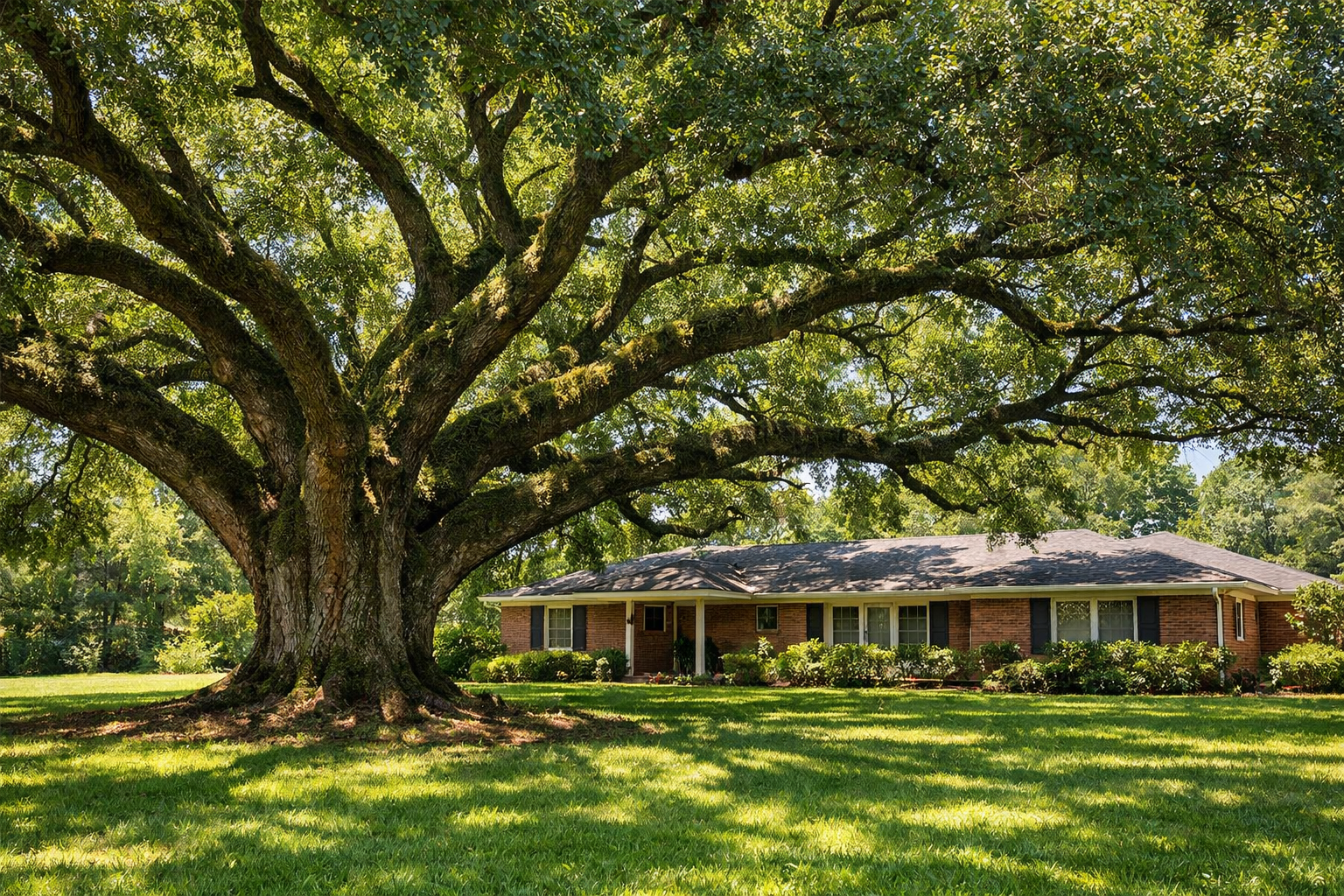
Water Oaks and Post Oaks in Shreveport's older neighborhoods, Broadmoor, Spring Lake, South Highlands, are often 40 to 60 years old. They have deep root systems but still suffer under extended drought. The goal is deep, infrequent watering rather than frequent shallow watering.
- Water mature trees deeply every 7-10 days during drought, soaking the entire root zone out to the drip line.
- Keep mulch replenished through summer to retain soil moisture and moderate root temperature.
- Avoid fertilizing stressed trees in July and August, pushing new growth during peak heat does more harm than good.
- Watch for sudden branch drop, which Water Oaks are known for during hot, still summer afternoons. If a large limb falls without warning, have the tree assessed promptly.
How often should you water trees in Louisiana? Established trees (in the ground 3 or more years) rarely need supplemental water except during extended drought of two weeks or more. Newly planted trees need water every 2-3 days for the first growing season, tapering to weekly by year two.
How to Prepare Trees for Louisiana Hurricane Season
Hurricane season runs June 1 through November 30, but the highest-risk window for Northwest Louisiana is August through October. The best preparation happens in late winter and early spring, not the week before a storm.
Structural pruning is your primary tool. Removing co-dominant leaders, deadwood, and crossing branches reduces wind resistance and eliminates the most likely failure points. A well-pruned tree sheds wind; a neglected one catches it like a sail.
Pre-hurricane season checklist:
- Complete all structural pruning by May 1.
- Remove any trees with significant lean toward the house, especially Loblolly Pines near the roofline.
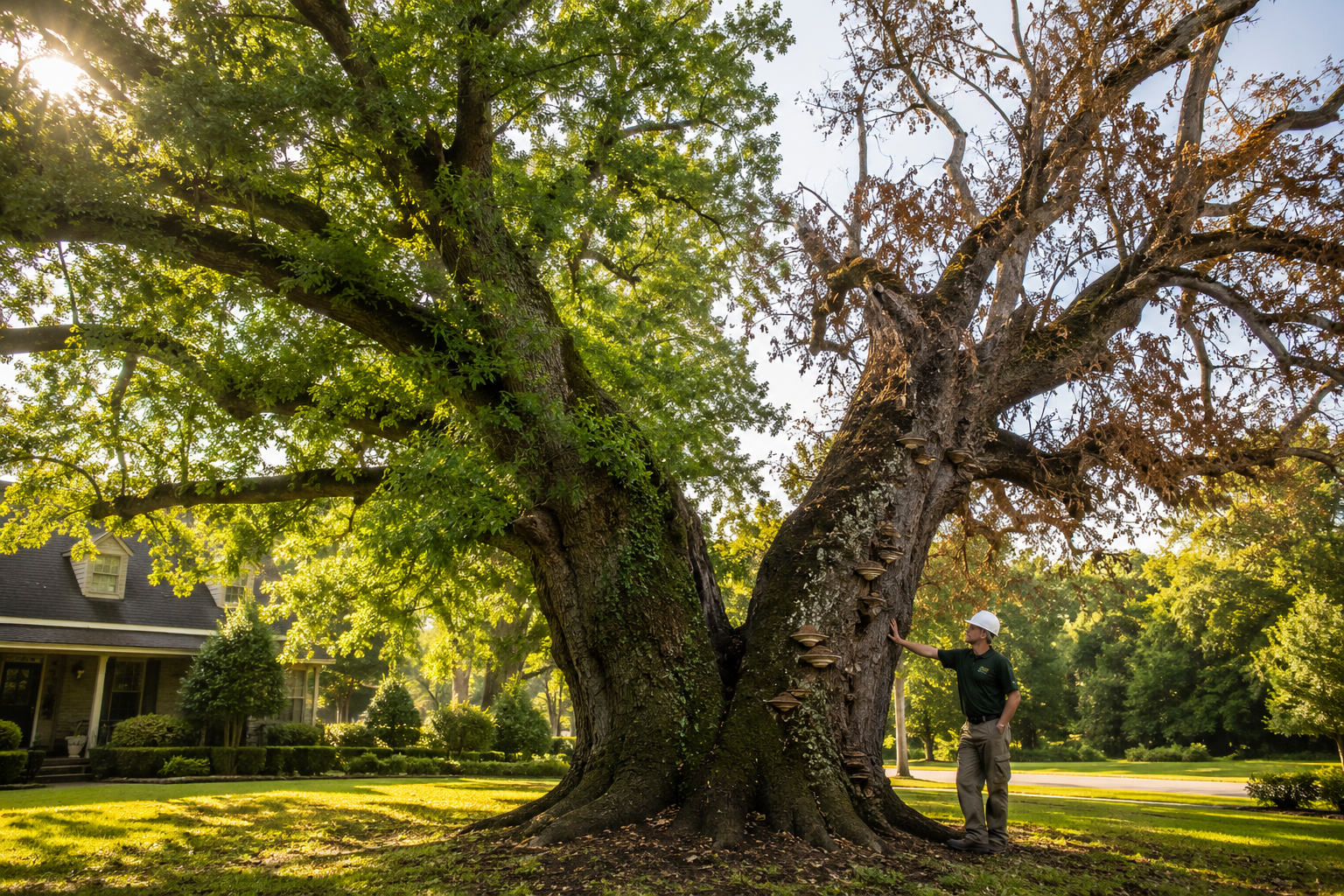
- Have mature Water Oaks assessed for internal decay, a probe or resistograph test can identify hollow sections invisible from the outside.
- Clear debris and deadwood from the canopy.
- Know your SWEPCO clearance requirements if branches are near power lines, line clearance is not a DIY job.
If a storm does hit, our 24/7 emergency tree service is staffed around the clock. Real people answer, and we move fast. We also handle storm debris cleanup so your yard is clear and safe quickly.
When Should You Prune Trees in Louisiana
Prune most shade trees in winter (December through February) when they are dormant. Prune spring-flowering trees like redbuds immediately after they finish blooming. Never prune oaks between February and June in areas with oak wilt pressure, though Northwest Louisiana has lower oak wilt incidence than East Texas, the risk is real enough to respect.
What's the difference between pruning and trimming trees?
These terms get used interchangeably, but they describe different work:
- Pruning is selective removal of branches to improve structure, health, or safety. It requires knowledge of branch architecture and tree biology.
- Trimming typically refers to cutting back growth for clearance, away from a roofline, fence, or utility line. It's maintenance-focused rather than health-focused.
Both matter. A tree that gets trimmed for clearance but never pruned for structure will eventually fail in a storm. Our tree trimming team in Shreveport does both, and we'll tell you which your tree actually needs.
Should you trim trees in fall or spring in Louisiana? Light clearance trimming can happen any time. Major structural work belongs in winter. Avoid heavy pruning in late summer and early fall, it stimulates new growth that won't harden before the first cold snap.
When to Fertilize Trees in Louisiana
Fertilize most landscape trees once in early spring, just before the growth flush begins, typically late February to mid-March in Northwest Louisiana. For fruit trees, the LSU AgCenter recommends split applications: February, April, and again in August after harvest [3].
General fertilization guidelines:
- Use a soil test before applying anything. Caddo Parish soils vary widely, some areas are heavy clay, others sandy loam near the Red River bottoms.
- Nitrogen drives leafy growth; phosphorus supports root development; potassium improves stress tolerance.
- Avoid fertilizing newly transplanted trees for the first full growing season, let roots establish first.
- Never fertilize a stressed or drought-affected tree in summer.
Pecans are heavy feeders and benefit from zinc supplementation in addition to standard NPK fertilizer, a detail many homeowners miss until they wonder why their tree never produces well.
What Pests Affect Trees in Louisiana
Several insects and diseases cause serious damage to Northwest Louisiana trees. Catching them early is the difference between treatment and removal.
Common tree pests in Caddo Parish and surrounding areas:
| Pest | Tree Affected | Peak Season | Warning Sign |
|---|---|---|---|
| Pine bark beetle | Loblolly Pine | Spring/Summer | Pitch tubes, yellowing needles |
| Tent caterpillar | Water Oak, Pecan | March, April | Silk web tents in branch forks |
| Oak gall wasp | Water Oak, Post Oak | Spring | Round galls on leaves or twigs |
| Cotton root rot | Multiple species | Summer | Sudden wilting, rapid death |
| Hypoxylon canker | Water Oak | Year-round | Bark sloughing, silver-gray patches |
Hypoxylon canker is particularly concerning because it signals a tree already in serious decline. There is no treatment, only removal. If you see the silver-gray bark patches on a Water Oak near your house in Shreveport or Bossier City, call for an assessment before the next storm season.
Best Time to Plant Trees in Louisiana
Plant trees in fall and winter, October through February, for best results in Northwest Louisiana. The Tangipahoa Parish LSU AgCenter extension office lists fall and early winter among the best planting windows for most trees and shrubs in Louisiana [9]. Roots establish during the cool months, and by the time summer heat arrives, the tree has a head start.
Best low-maintenance trees for Louisiana:
- Bald Cypress, Almost no pest or disease issues. Handles wet and dry conditions.
- Southern Magnolia, Long-lived, minimal care beyond leaf cleanup.
- Eastern Red Cedar, Drought-tolerant once established, good wildlife value.
- Nuttall Oak, Faster-growing than Post Oak, better structure than Water Oak.
Avoid Bradford Pear. It splits in storms, spreads invasively, and smells unpleasant in bloom. Like Chinese Tallow, it's a tree that looks good in the nursery and causes problems in the yard.
How Much Does Tree Removal Cost in Louisiana
Tree removal in Louisiana ranges from under $300 for a small tree in an open yard to over $2,000 for a large Loblolly Pine or Water Oak close to a structure. Several factors drive the price:
- Tree size, Height and trunk diameter are the primary cost drivers.
- Location, A tree over a roof, fence, or near power lines requires rigging and extra crew time.
- Condition, Decayed or brittle trees are harder and more dangerous to remove safely.
- Debris disposal, Hauling versus chipping versus leaving wood on-site changes the total.
We give free estimates with no obligation and no pressure. An honest assessment of what the job actually requires, that's how we've built our reputation in Shreveport and across Northwest Louisiana. Contact us at (318) XXX-XXXX or info@shreveporttreeremoval.com to schedule yours.
If you're in Minden, Blanchard, or other surrounding communities, we serve those areas too, see our Minden tree service page and Blanchard tree service page for local coverage details.
Common Mistakes People Make with Tree Care in Louisiana
1. Topping trees. Cutting the top out of a mature tree destroys its structure, invites decay, and creates multiple weak regrowth sprouts that fail in the next storm. No legitimate arborist recommends topping.
2. Planting too deep. The root flare should be visible at the soil surface. Planting even two inches too deep stresses the tree for years.
3. Volcano mulching. Piling mulch against the trunk traps moisture, invites rot, and creates a home for insects. Keep mulch pulled back 3-4 inches from the trunk.
4. Ignoring small problems. A crack in a major scaffold branch, a lean that wasn't there last year, bark damage at the base, these are not cosmetic issues. They are structural warnings.
5. Hiring the cheapest crew after a storm. After a major storm, out-of-town crews without Louisiana licenses flood the area. Licensed, insured, local matters. Your trees, our responsibility, and we stand behind every job.
Frequently Asked Questions
Can I prune oak trees in the summer in Louisiana? Avoid pruning oaks from February through June if possible, due to oak wilt risk. If emergency pruning is needed in summer, seal cuts immediately with wound paint. Winter remains the preferred window for oak pruning in Northwest Louisiana.
How do I know if my tree needs to come down or can be saved? A certified arborist looks at structural integrity, root health, canopy density, and proximity to structures. If it can be saved, we'll tell you. If it can't, we'll show you why, with specifics, not guesswork.
Is it normal for Water Oaks to drop limbs in summer? Yes. Water Oaks are prone to sudden branch drop, especially during hot, humid, still conditions. It is not always predictable, but trees with visible decay, heavy lean, or prior storm damage are higher risk. Have them assessed annually.
Do I need a permit to remove a tree in Shreveport? Caddo Parish and the City of Shreveport have specific ordinances for tree removal, particularly for heritage trees and trees in certain zones. We handle the permit research as part of our estimate process, you don't need to figure that out alone.
How long after planting does a new tree need supplemental water? Plan on consistent supplemental watering for the first two full growing seasons. In Northwest Louisiana's summer heat, that means every 2-3 days for new trees during July and August, tapering as the tree establishes.
What is the best mulch for trees in Louisiana? Aged wood chip mulch applied 3-4 inches deep over the root zone is ideal. Avoid dyed mulch, rubber mulch, and anything that compacts tightly. Pine straw works well under established pines and magnolias.
Conclusion
Louisiana's climate demands a tree care schedule built around local conditions, not generic national advice. The core principle of this Seasonal Tree Care Calendar Louisiana Guide is simple: do the right work at the right time, and your trees will outlast the storms. Plant in winter, prune in dormancy, water deeply in summer, and prepare structurally before hurricane season arrives.
If you're not sure where your trees stand, start with an honest assessment. We serve Shreveport, Bossier City, and all of Northwest Louisiana, licensed, insured, and local. Call us at (318) XXX-XXXX or email info@shreveporttreeremoval.com for a free estimate. No obligation, no pressure. Just a straight answer about what your trees actually need.
References
[1] Pruning And Fertilizing Fruit And Nut Trees - https://www.lsuagcenter.com/topics/lawn_garden/ornamentals/trees_shrubs/pruning-and-fertilizing-fruit-and-nut-trees
[2] Tree Selection And Planting - https://www.lsuagcenter.com/topics/lawn_garden/ornamentals/trees_shrubs/tree-selection-and-planting
[3] The Louisiana Home Orchard - https://www.lsuagcenter.com/~/media/system/5/5/6/4/55646c0ef9404ad2073c46b006e13b51/the%20louisiana%20home%20orchardpdf.pdf
[8] Get It Growing - https://www.lsuagcenter.com/portals/communications/news/get_it_growing
[9] Tangipahoa Parish Features - https://www.lsuagcenter.com/portals/our_offices/parishes/tangipahoa/features
0 Comments