TREE TRIMMING & PRUNING | SHREVEPORT, LA
Tree Trimming and Pruning in Shreveport
Request tree trimming for dead, damaged, crossing, or overgrown branches; clearance near roofs, driveways, and walkways; or pruning intended to improve a young tree's structure. The appropriate approach depends on the tree species, condition, location, access, and your goals for the property.
Share the property location, photos, nearby structures or utility lines, and the result you want. The provider handling the request can then evaluate the tree, explain suitable options, and confirm scope, pricing, credentials, and scheduling.
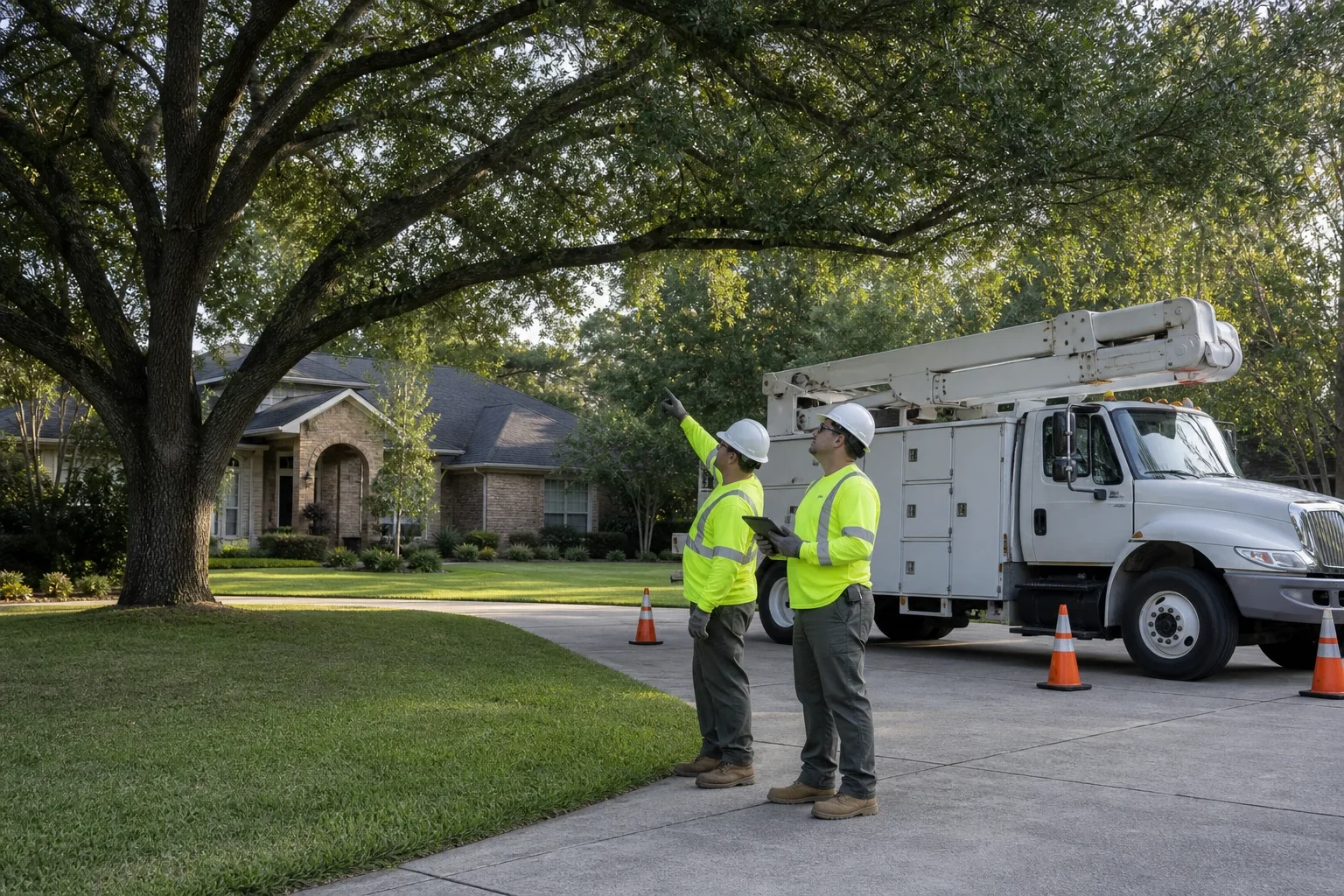
When Pruning May Be Appropriate
Dead, Damaged, or Crossing Limbs
Deadwood, broken branches, weak attachments, and branches that rub together may warrant evaluation and selective removal.
Clearance Around Property
Branches may need clearance from a roof, driveway, walkway, fence, sign, or sight line. The amount removed should account for future growth and the tree's natural form.
Structure and Growth Management
Young-tree training, crown cleaning, or careful reduction may help address competing leaders, poor spacing, or an overextended limb. Topping and indiscriminate cutting should not be presented as pruning methods.
Start With a Specific Goal
Pruning should solve a specific problem. Because every cut changes how a tree grows, the goal is to remove only what is justified by the tree's condition and the property around it.
CHOOSING THE RIGHT APPROACH
Trimming, Pruning, or Removal?
“Trimming” is often used for general branch clearance or appearance. “Pruning” is more specific: branches are selected and cuts are placed for a defined structural, safety, or tree-care objective.
If a tree is severely decayed, uprooted, split, or structurally unstable, pruning may not address the underlying concern and removal may need to be discussed.
Learn about tree removal
Storm-damaged tree? Review emergency guidance
TREE TRIMMING REQUEST PROCESS
How a Trimming Request Is Handled
1. Describe the tree and goal. Provide the address, photos, approximate tree size, nearby structures, access details, and the concern you want addressed.
2. Tree and site evaluation. The provider may review species, condition, branch attachments, clearance needs, work-zone hazards, equipment access, and whether pruning is suitable.
3. Confirm the written scope. Confirm which branches or objectives are included, cleanup and debris options, timing, credentials, price, and any exclusions before work begins.
4. Schedule the approved work. Scheduling depends on provider availability, weather, site access, tree condition, and whether utility coordination is needed.
Verify Who Will Perform the Work
Louisiana requires an arborist license for paid tree removal, pruning, trimming, cabling, fertilization, and similar tree-surgery work. Utility-right-of-way work requires the appropriate utility arborist credential. Before authorizing work, ask which licensed provider is responsible for the project and verify current credentials through the Louisiana Department of Agriculture and Forestry.
Ask for a written scope and price, current insurance information, the planned pruning objective, and clear cleanup responsibilities. Do not assume stump work, hauling, utility coordination, or every branch discussed is included unless it appears in the approved scope.
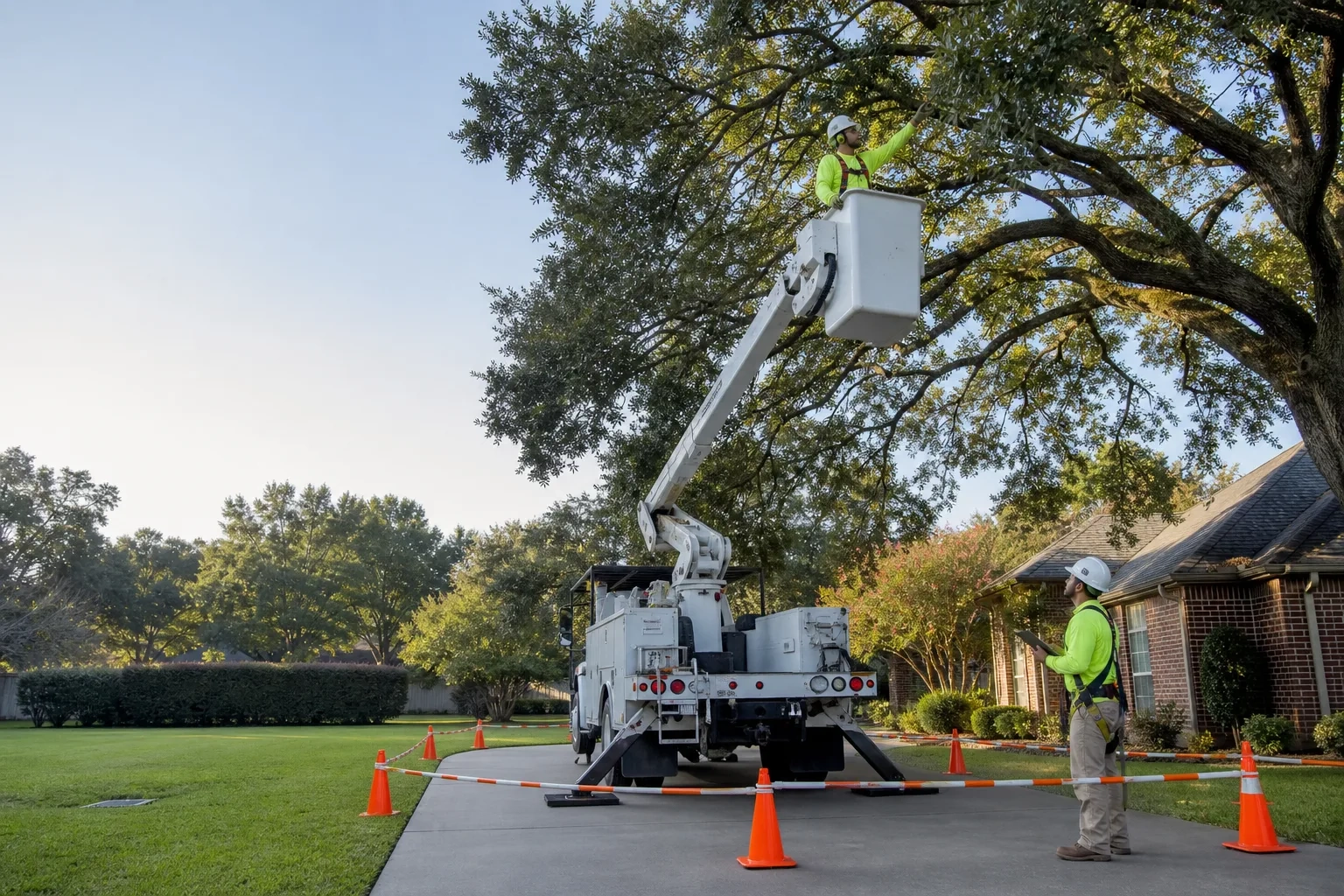
Timing, Utility Lines, and Estimate Factors
When should trees be pruned in Shreveport?
Timing depends on the species, condition, and reason for pruning. LSU AgCenter guidance notes that much Louisiana tree pruning is commonly performed during the dormant winter period, while light routine removal of weak, dead, or diseased limbs may be possible at other times. Flowering cycles, active disease transmission periods, recent stress, and the amount of live canopy being removed can change the recommendation.
LSU AgCenter pruning guidance · ISA pruning guidance
Trees and utility lines
Do not attempt to prune a branch that is touching, hanging over, or close enough to contact an energized line. Keep people and tools away and contact SWEPCO for utility-line guidance. Ordinary property-clearance pruning should not be described as utility-line work.
SWEPCO vegetation and line-safety information
What affects a trimming estimate?
- Tree height, canopy spread, species, and condition
- Number, diameter, and position of branches included
- Clearance from roofs, fences, vehicles, roads, or neighboring property
- Work-zone and equipment access
- Debris handling, hauling, chipping, or material left on site
- Urgency, weather, and provider availability
A useful estimate should define the pruning objective and the included branches or work areas—not simply say “trim the tree.”
Tree Trimming Questions
What is the difference between tree trimming and tree pruning?
Trimming is a broad term often used for clearance or appearance. Pruning is the selective removal of branches for a defined objective such as removing deadwood, improving structure, or creating appropriate clearance.
How often should a tree be trimmed?
There is no universal schedule. Species, age, growth rate, prior cuts, site conditions, and the pruning objective all matter. Have the tree evaluated when you notice a specific concern instead of removing live canopy only because a calendar interval has passed.
What is the best time of year to prune trees in Shreveport?
The dormant winter period is appropriate for many Louisiana trees, but timing varies by species, flowering cycle, tree condition, disease concerns, and whether the work is routine or urgent.
Can branches be trimmed away from a roof or driveway?
Often, yes. The provider should evaluate how much clearance is needed, how future growth will affect it, and whether the cuts can preserve the tree's natural structure.
Can you trim branches near power lines?
Branches touching or threatening energized lines require utility guidance and appropriately qualified work. Keep away and contact SWEPCO first; do not attempt the work yourself.
Will pruning prevent storm damage?
Pruning cannot storm-proof a tree or guarantee that limbs will not fail. Selective removal may address specific concerns, but risk depends on the whole tree, its roots, site conditions, and the severity of weather.
Is cleanup included?
Cleanup varies by project. Confirm whether the written scope includes chipping, hauling, raking, wood cut to manageable lengths, or material left on the property.
When might removal be more appropriate than pruning?
Removal may need to be considered when a tree is severely decayed, uprooted, split, structurally unstable, or cannot be managed safely through selective pruning.
Request Tree Trimming in Shreveport
Phone
Service Area
Shreveport and nearby Northwest Louisiana communities