
Last updated: July 14, 2026
Quick Answer: Water oaks are one of the most common shade trees in Shreveport yards, and they need more attention than most homeowners realize. They grow fast, live 60-80 years, and can reach 80 feet tall, but their weak wood and shallow roots make them a real liability without proper pruning, structural training, and storm prep. This oak tree care guide for Louisiana homeowners covers everything you need to keep your water oak healthy, safe, and standing.
Key Takeaways
- Water oaks grow fast (up to 2 feet per year) but are considered weak-wooded with shallow roots, making storm damage a serious risk in Northwest Louisiana
- Train young water oaks to a central leader early, this single step prevents most structural failures later [1]
- Keep main branches spaced at least 2 feet apart along the trunk to reduce splitting risk [1]
- Plant new water oaks at least 20 feet from your home's foundation and any SWEPCO power lines [6]
- Louisiana's humidity creates ideal conditions for hypoxylon canker and other fungal diseases, learn the signs before they become a removal job
- Water oaks are semi-evergreen in Shreveport; leaf drop in late winter is normal, not a death sentence
- A licensed arborist should evaluate any water oak showing canopy dieback, decay, or lean before hurricane season [3]
- Free estimates are the right first step, never pay for an assessment before you know what you're dealing with
What Is a Water Oak Tree and How Do You Identify It
Water oak (Quercus nigra) is a medium-to-large native oak that grows naturally along creek bottoms, pond edges, and low-lying areas across the South, including most of Caddo Parish. It's one of the most planted shade trees in Shreveport neighborhoods like Broadmoor, South Highlands, and Spring Lake.
Identification markers:
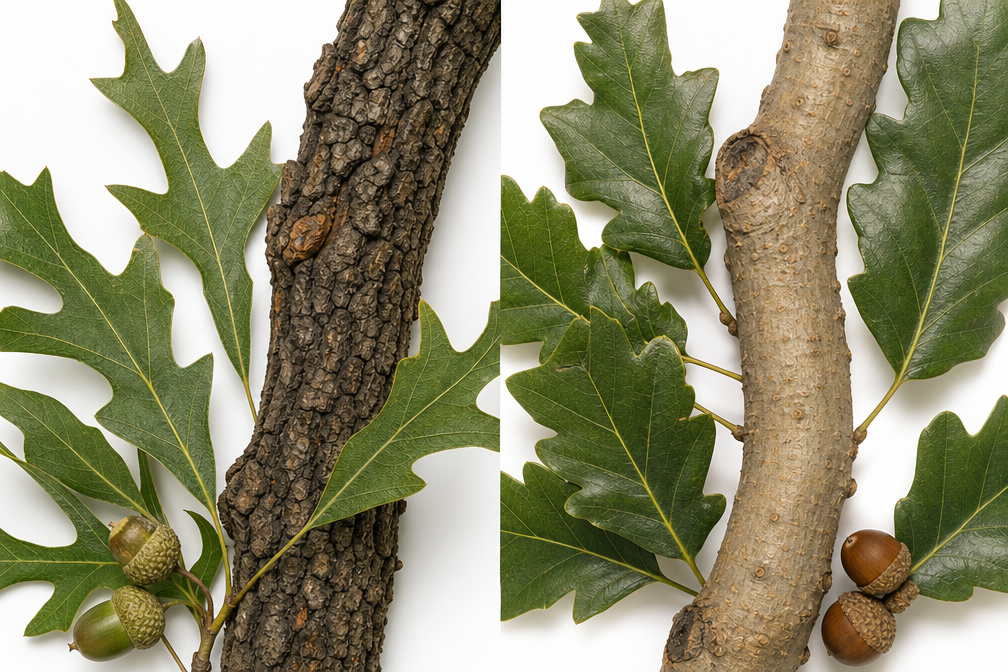
- Leaves are highly variable, the same tree can have spatula-shaped, three-lobed, and oval leaves all at once
- Leaves are small (2-4 inches), dark green on top, paler underneath
- Bark is dark gray to black, becoming deeply furrowed with age
- Small, round acorns about the size of a marble, nearly black when ripe
- Semi-evergreen: holds leaves through winter, drops them in late winter/early spring just before new growth
Water oaks are often confused with willow oaks, but willow oaks have narrow, grass-like leaves. If your tree has mixed leaf shapes on the same branch, it's almost certainly a water oak.
How Tall Do Water Oak Trees Get and How Much Space Do They Need
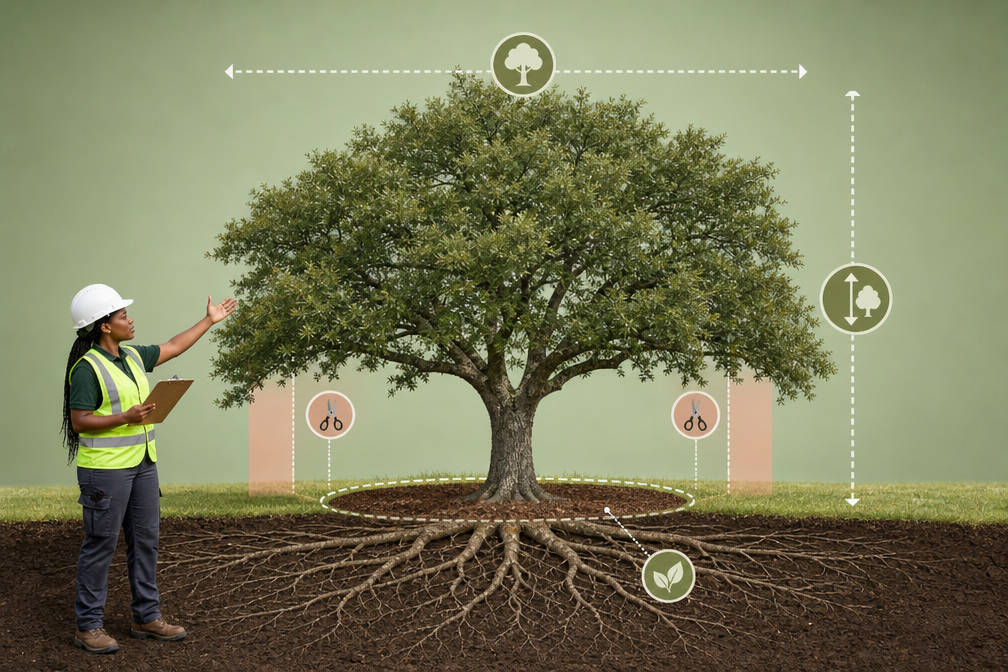
A mature water oak reaches 60-80 feet tall with a canopy spread of 40-60 feet [6]. That's a big tree, bigger than most Shreveport homeowners expect when they plant a sapling.
Plant new water oaks at least 20 feet from your home's foundation, driveways, and any overhead power lines. The shallow, spreading root system will eventually reach structures, and the canopy will conflict with SWEPCO lines if planted too close.
Space planning basics:
- 20 feet minimum from structures and utilities
- 30+ feet preferred if planting near a fence line or property boundary
- Test drainage before planting: dig a small hole, fill it with water, and confirm it drains within 12 hours [6]
- If drainage is slow, plant with the root flare 1-2 inches above grade
- Apply a 3-inch ring of hardwood mulch around the base, keep it away from the trunk itself [6]
Best Time of Year to Plant Water Oak Trees in Louisiana
Plant water oaks in late fall through early winter, November through January is ideal in Northwest Louisiana. Cooler soil temperatures reduce transplant stress, and winter rains help establish roots before the brutal summer heat arrives.
Container-grown trees can go in the ground almost any time, but avoid planting during July and August unless you're prepared to water daily. Bare-root saplings should only go in during dormancy.
How Often Should You Water Oak Trees in Louisiana
Established water oaks (3+ years in the ground) rarely need supplemental watering in Louisiana. Our average annual rainfall does the job. The exception is during extended drought, if you haven't had meaningful rain in three or more weeks during summer, give the root zone a deep soak.
Newly planted trees need more attention:
- Water every 2-3 days for the first month
- Taper to once a week through the first growing season
- Deep, slow watering beats frequent shallow watering every time, you want moisture 12 inches down, not just at the surface
Overwatering is a real problem in heavy clay soils common across Shreveport. Soggy roots invite fungal rot. If your yard stays wet after rain, address drainage before you plant.
Water Oak Tree Pruning Techniques and When to Prune
Prune water oaks in late winter, January through February in Louisiana, while the tree is dormant and before spring growth flush. This timing reduces stress and limits exposure to the beetles that spread oak wilt.
The most important pruning goal is structural. LSU AgCenter recommends training water oaks to a single central trunk with main branches spaced at least 2 feet apart vertically [1]. This prevents the weak, co-dominant stems that split under ice, wind, or their own weight.
Pruning rules that matter:
- Remove crossing, rubbing, or downward-growing branches early, while cuts are small
- Never remove more than 25% of the canopy in a single year
- Make cuts just outside the branch collar, don't leave stubs, don't cut flush
- Avoid large pruning wounds; they become decay entry points [1]
- Skip the wound sealant, research shows it does more harm than good
For mature trees over 20 feet, this is not a DIY job. Our professional tree trimming service in Shreveport handles structural pruning safely, with the right equipment to reach the upper canopy without damaging the tree.
Water Oak Tree Diseases: Louisiana Humidity Problems
Louisiana's heat and humidity create near-perfect conditions for several water oak diseases. Catch them early and you can often manage them. Miss them, and you're looking at a removal job.
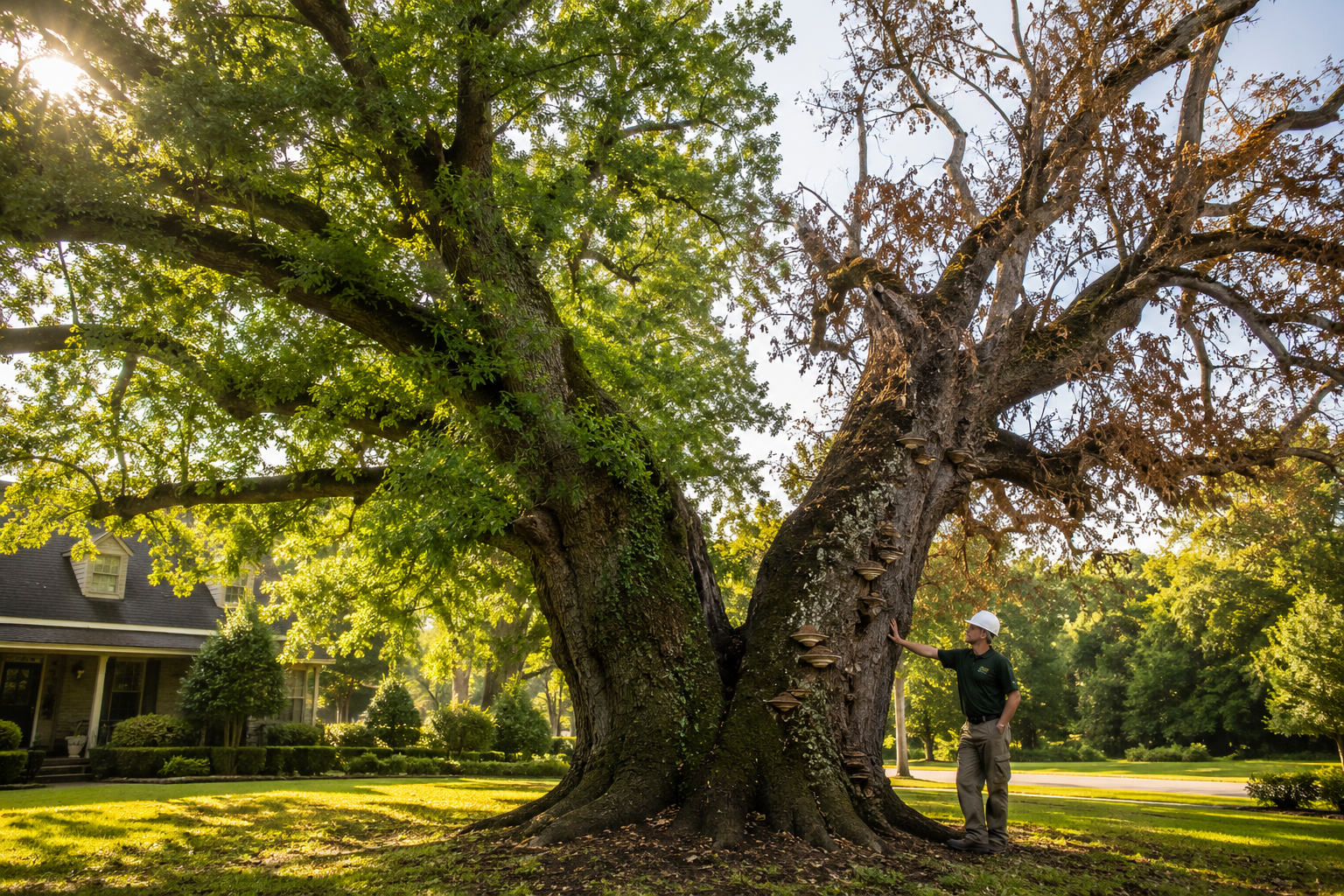
Hypoxylon canker is the most serious. It's a fungal pathogen that attacks stressed trees, killing sections of bark and leaving a powdery, tan-to-gray crust on the wood. There is no chemical cure. Once hypoxylon canker is established, the affected limbs or the entire tree must come down [7].
Other common problems:
- Oak leaf blister: causes raised, blister-like spots on leaves; mostly cosmetic, rarely fatal
- Bacterial leaf scorch: causes brown leaf margins that look like drought stress; spread by leafhoppers
- Root rot: common in poorly drained soils; shows as crown dieback and declining vigor
- Galls: small, round growths on leaves or twigs caused by wasps; almost never harmful
If your water oak has areas of dead bark, sudden branch dieback, or a powdery crust on the wood, call a certified arborist before the problem spreads. Contact Shreveport Trees for an honest assessment, if it can be saved, we'll tell you. If it can't, we'll show you why.
Why Is My Water Oak Tree Losing Leaves in Louisiana
Water oaks are semi-evergreen, and late-winter leaf drop (February through March) is completely normal. The old leaves fall just as new growth pushes out. Most homeowners who call us in February thinking their tree is dying just need reassurance.
When leaf drop is NOT normal:
- Summer leaf drop, especially if leaves are brown and crispy before falling
- Leaf drop combined with branch dieback or bark discoloration
- Leaves that turn yellow-green and fall in spring before new growth appears
Summer defoliation usually signals stress, drought, root damage, disease, or construction damage to the root zone. If your water oak is dropping leaves in June or July, that tree needs a professional look.
Water Oak vs. Live Oak: Which Is Better for Louisiana Yards
Live oak (Quercus virginiana) is the stronger, longer-lived choice for most Shreveport homeowners. Water oak grows faster, but live oak is far more wind-resistant, longer-lived (200+ years vs. 60-80 for water oak), and less prone to structural failure.
| Feature | Water Oak | Live Oak |
|---|---|---|
| Growth rate | Fast (1-2 ft/year) | Moderate |
| Lifespan | 60-80 years | 200+ years |
| Storm resistance | Lower, weak wood [11] | High |
| Shade coverage | Excellent | Excellent |
| Soil tolerance | Wet to average | Well-drained preferred |
Choose water oak if you have low, wet areas where live oak won't thrive, or if you need fast shade. Choose live oak if you're planting for the long term and want a tree that can handle a Category 2 hurricane without dropping half its canopy on your roof.
Water Oak Trees and Hurricane Damage Risk in Louisiana
Water oaks carry a higher storm risk than most homeowners realize. Recent Gulf Coast municipal guidance has classified water oaks as fast-growing, weak-wooded trees with shallow root systems, some municipalities have added them to exempt tree lists specifically because of their tendency to fail in storms [11].
In Shreveport, we see this every hurricane season. A water oak that looks healthy can still fail at a co-dominant stem or a decay pocket that wasn't visible from the ground.
Before hurricane season, have a licensed arborist check for:
- Co-dominant stems (two trunks of equal size competing at a V-shaped crotch)
- Canopy dieback or dead wood in the upper crown
- Cracks, cavities, or fungal conks on the trunk
- Leaning that has increased over the past year
- Root zone disturbance from construction or soil compaction
A New Orleans-area expert column puts it plainly: if your water oak shows any apparent defects, decay, or canopy dieback, hire a licensed arborist to evaluate it before major storms, not after [3]. Our 24/7 emergency tree service is available when storms hit, but the goal is always to assess risk before the storm, not clean up after it.
For storm debris cleanup after a weather event, our tree debris cleanup team in Shreveport can handle everything from downed limbs to full tree removal.
Do Water Oak Trees Need Fertilizer in Louisiana Soil
Most established water oaks in Caddo Parish don't need fertilizer. Louisiana's clay-heavy soils are naturally nutrient-rich, and over-fertilizing encourages rapid, weak growth that's more susceptible to storm damage and disease.
If a soil test shows a specific deficiency, low nitrogen or iron chlorosis, a targeted application makes sense. Otherwise, leave it alone. A 3-inch layer of hardwood mulch over the root zone does more good than most fertilizer programs: it retains moisture, moderates soil temperature, and feeds the soil as it breaks down.
Young trees in sandy or compacted soils may benefit from a slow-release balanced fertilizer in early spring, but get a soil test first.
How Long Does It Take for a Water Oak Tree to Mature
Water oaks reach full canopy size in 20-30 years under good conditions. They're among the faster-growing oaks, adding 1-2 feet of height per year when young and well-watered. A 10-year-old water oak planted in a Shreveport yard can already provide meaningful shade.
"Mature" in the structural sense, meaning the tree has developed its full scaffold and root system, happens around 15-20 years. That's also when structural defects from poor early training start showing up as real problems.
Can You Grow Water Oak Trees in Containers or Pots
No, not as a long-term option. Water oaks develop deep taproots when young and wide lateral roots as they mature. A container large enough to sustain one would be impractical for any home landscape.
Short-term container growing (1-2 years for a nursery sapling) is fine before transplanting to a permanent in-ground location. Beyond that, root restriction stunts growth and creates structural instability.
Common Mistakes People Make Caring for Oak Trees in Louisiana
These are the calls we get most often at Shreveport Trees, problems that started small and became expensive.
Topping the tree. Cutting the main trunk or large scaffold branches back to stubs is the single most damaging thing you can do to a water oak. It creates massive decay wounds, stimulates weak regrowth, and shortens the tree's life dramatically. If a tree service quotes you a "topping" job, find a different company.
Planting too close to the house. A water oak planted 10 feet from a foundation looks fine at year five. At year 20, the roots are under your slab and the canopy is over your roof.
Ignoring early structural problems. A small co-dominant stem that could be corrected with one pruning cut at year three becomes a major removal risk at year 15. Early training is cheap. Emergency removal after a storm is not.
Piling mulch against the trunk. "Mulch volcanoes" hold moisture against the bark, inviting rot and disease. Keep mulch 4-6 inches away from the trunk.
Skipping professional assessment after construction. If you've had any work done near your water oak, trenching, grading, new driveways, have the root zone assessed. Construction damage is a leading cause of delayed tree decline in Shreveport neighborhoods.
For trees that have already declined past saving, our tree removal service handles water oaks of any size, and our stump grinding team can clear the stump the same day.
Conclusion
Water oaks are a defining part of the Shreveport landscape, from the shaded streets of South Highlands to the older lots along Cross Lake. They're fast, beautiful, and worth keeping. But they demand more attention than a live oak or a pecan. Structural training when young, regular pruning, disease monitoring, and a pre-hurricane inspection aren't optional extras, they're what keeps an 80-foot tree from becoming an 80-foot liability.
Your next steps:
- Walk your water oak today. Look for dead wood in the canopy, cracks at major branch unions, and any lean that seems new.
- If the tree is within striking distance of your home, schedule a professional assessment before hurricane season.
- If you have a young water oak (under 10 years), start structural training now, it's the cheapest investment you'll make in that tree.
Shreveport Trees is licensed, insured, and local. We know water oaks because we've been trimming, assessing, and removing them across Northwest Louisiana for years. Your trees, our responsibility.
Call us for a free estimate, no obligation, no pressure. Serving Shreveport, Bossier City, Blanchard, Haughton, Benton, and all of Northwest Louisiana. Get your free estimate here or reach us anytime at (318) XXX-XXXX. 24/7 emergency response, real people, real fast.
Frequently Asked Questions
How do I know if my water oak is dying or just dropping leaves normally? Normal leaf drop happens in late winter (February, March) just before new growth. If leaves drop in summer, or if drop is accompanied by branch dieback, bark discoloration, or powdery fungal growth on the wood, the tree has a problem that needs professional evaluation.
Is a water oak a good shade tree for a Shreveport yard? Yes, with caveats. Water oaks grow fast and provide excellent shade within 10-15 years. But they're weaker-wooded than live oaks and carry higher storm risk. They're a good choice for wet, low-lying areas where live oaks struggle, less ideal for planting close to structures.
How much does it cost to trim a water oak in Louisiana? Trimming costs vary based on tree size, canopy access, and how much work is needed. A standard pruning job on a mature water oak in Shreveport typically runs several hundred dollars. The best first step is always a free estimate, call us at (318) XXX-XXXX and we'll give you a straight number.
Can water oak roots damage my foundation? They can, especially if the tree was planted too close. Water oak roots are shallow and wide-spreading. Trees within 15-20 feet of a foundation should be monitored. If you're seeing foundation cracks alongside a mature water oak, have both a structural engineer and an arborist take a look.
When should I just remove a water oak instead of trying to save it? Remove it when: hypoxylon canker covers more than 30% of the crown, the trunk has significant internal decay near the base, the tree has a severe lean toward a structure, or a professional arborist determines the risk of failure outweighs the cost of retention. If it can be saved, we'll tell you. If it can't, we'll show you why.
How do I find a licensed arborist in Shreveport for water oak assessment? Look for ISA (International Society of Arboriculture) certification and verify the company carries liability insurance. Shreveport Trees is licensed, insured, and local, learn more about our team or read what your neighbors say.
References
[1] Page1597352626934 - https://www.lsuagcenter.com/profiles/lblack/articles/page1597352626934 [3] Article 6ade8466 B1f4 11ec B2fc 97b0e4f57fe2 - https://www.nola.com/entertainment_life/home_garden/get-a-pro-to-evaluate-troubled-water-oak-it-could-be-at-risk-of-falling/article_6ade8466-b1f4-11ec-b2fc-97b0e4f57fe2.html [6] Water Oak Trees In Houston The Complete Guide To Fast Growing Shade - https://verdanttreefarm.com/water-oak-trees-in-houston-the-complete-guide-to-fast-growing-shade/ [7] Water Oak Disease - https://www.lsuagcenter.com/portals/blogs/southerngarden/water-oak-disease [10] Water Oak Tree Care - https://www.gardeningknowhow.com/ornamental/trees/oak/water-oak-tree-care.htm
0 Comments