
Last updated: July 14, 2026
Quick Answer: The main warning signs a tree is dying, dangerous, or dead include a bare crown during growing season, peeling or cracked bark, fungal growth at the base, a new lean, and dead branches throughout the canopy. Any combination of these signs, especially over a structure or walkway, means you need a professional assessment now, not next season.
Key Takeaways
- A tree with more than 25% of its crown dead or bare in summer is in serious decline and poses a falling hazard [2]
- Fungal growth (mushrooms, shelf fungi) at the trunk base signals advanced internal decay, the tree may look alive but be structurally hollow [1][9]
- A new or increasing lean, especially with heaving soil at the base, is an emergency, root failure can bring the whole tree down fast [3][6]
- The scratch test (scraping a twig to look for green tissue) is the fastest DIY check for life in a tree [1][3]
- Dead trees do not fall on a predictable schedule, some stand for years, others fail in the next thunderstorm
- Homeowners who ignore documented hazard signs face real legal liability; a 2026 California case resulted in a $19 million settlement after a child was killed by a falling limb [4]
- If it can be saved, we'll tell you. If it can't, we'll show you why, that's the honest assessment every Shreveport homeowner deserves
- Dead tree removal costs vary widely based on size, location, and access, a free estimate is always the right first step
- Dormant trees and dead trees look similar in winter; the scratch test and bud check separate them reliably
- 24/7 emergency response is available for trees that are actively threatening your home or family
What Are the Main Warning Signs a Tree Is Dying, Dangerous, or Dead
The clearest warning signs a tree is dying, dangerous, or dead are visible in the crown, bark, base, and root zone. No single sign guarantees a tree is gone, but several together demand immediate attention.
Here is what to look for:
Crown and canopy:
- Bare branches during the growing season (May through September in Northwest Louisiana)
- Large sections of the crown with no leaves while neighboring trees are fully leafed out
- Dead branch stubs scattered throughout, a sign the tree has been shedding wood for a while [5]
- Thinning canopy year over year, or browning needle tips on Loblolly Pines [7][8]
Bark and trunk:
- Peeling, flaking, or loose bark over large sections of the trunk [1][6]
- Wide vertical cracks running through the main stem
- Open cavities or hollow sections in the trunk
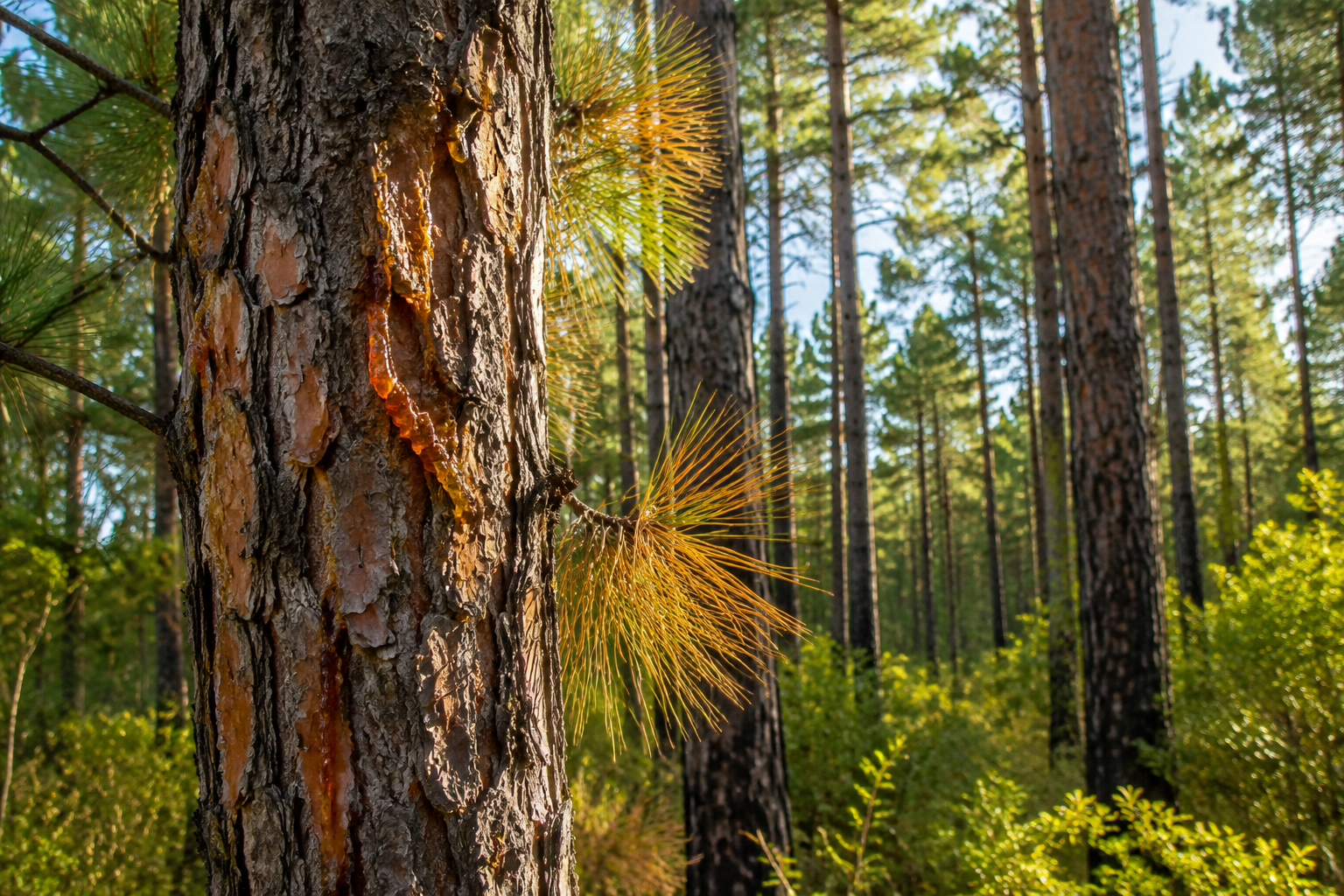
- Oozing sap, wet spots, or dark staining on the bark [3]
Base and roots:
- Mushrooms, bracket fungi, or shelf fungi growing at the trunk base or on the roots [9][10]
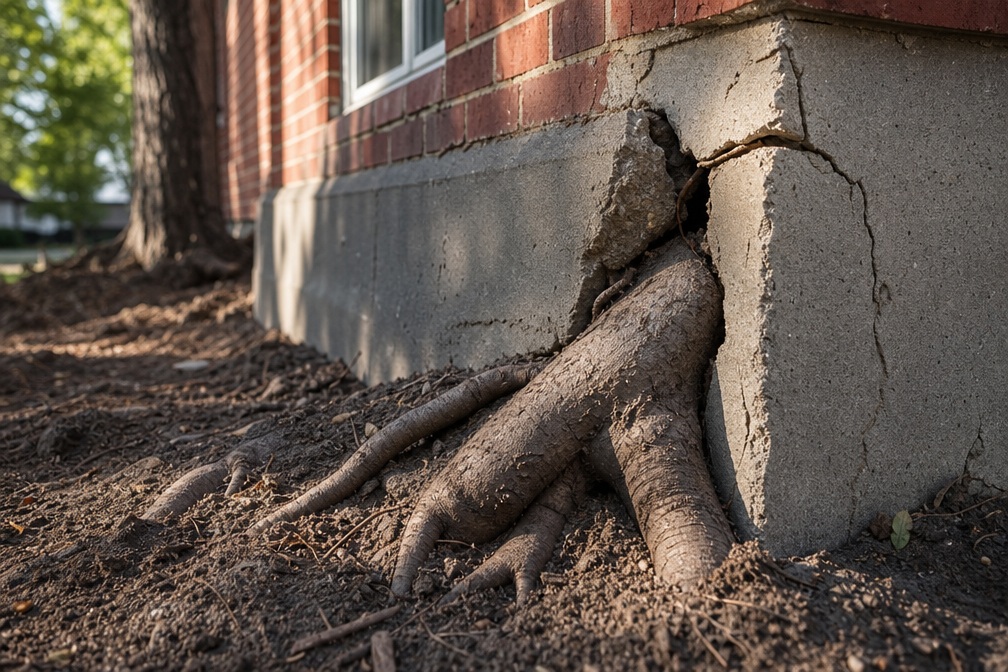
- Soil heaving, cracking, or lifting around the base
- Exposed or snapped roots near the surface [6]
Structural:
- A new lean that was not there last year
- Hanging or partially attached limbs, what arborists call "widow makers"
- Frequent small branch drops after light wind [5]
When you see three or more of these signs on the same tree, especially one near your house, driveway, or where your kids play, treat it as urgent.
How Do I Know If a Dead Tree Is Dangerous
A dead tree is dangerous when it stands over something that matters, your roof, your fence, a power line, a sidewalk, or a spot where people regularly stand. Dead wood loses strength as decay progresses, and falling debris is one of the most common early warning signs of a hazardous tree [5][9].
A dead tree becomes an active hazard when:
- It leans toward a structure, vehicle, or utility line
- The trunk sounds hollow when knocked with a mallet
- Bark is falling off in large sheets, exposing bare wood underneath
- Shelf fungi or mushrooms are present at the base (advanced internal rot) [1]
- More than 25% of the crown is dead or bare [2]
- The root zone shows heaving or cracking soil [6]
In Shreveport, we deal with Water Oaks constantly. They are beautiful trees, but they are also notorious for rotting from the inside out while still showing leaves at the tips. A Water Oak in South Highlands or Broadmoor that looks "mostly fine" from the street can have a completely hollow core. That tree is not fine.
If you are unsure, our tree removal team in Shreveport can assess any tree on your property and give you a straight answer.
Can a Dead Tree Fall on My House
Yes. A dead tree absolutely can fall on your house, and it does not need a major storm to do it. Root decay, internal rot, and soil saturation from heavy rain, all common in Caddo Parish, can cause a tree to topple with very little warning [3][6].
Northwest Louisiana gets severe thunderstorms, ice storms, and the occasional tropical system remnant. A dead or dying tree that might stand through a calm summer can come down fast when a line of storms pushes through. We have seen it happen in Spring Lake, in Bossier City neighborhoods near the Red River, and along Cross Lake.
The liability question matters too. A 2026 case in California resulted in a $19 million settlement after a child was killed by a falling tree limb, and evidence showed officials had prior concerns about the tree but did not act [4]. Homeowners in Louisiana face the same exposure. If you know a tree is hazardous and you do nothing, that knowledge works against you.
What Causes Trees to Die Suddenly
Trees rarely die overnight, but they can decline fast enough that it feels sudden. The most common causes in Northwest Louisiana are:
- Root damage from construction, trenching, or compaction, common in older Shreveport neighborhoods where utility work disrupts root systems
- Drought stress followed by opportunistic pests and disease
- Lightning strikes, a single strike can kill a large Pecan or Magnolia within one season
- Soil flooding, Bald Cypress thrives in wet soil, but most oaks and pines do not; prolonged flooding from heavy rain suffocates roots
- Chinese Tallow invasion, this invasive species competes aggressively and can weaken native trees nearby
- Girdling roots, roots that wrap around the base and slowly strangle the tree
- Disease and fungal infection, oak wilt, hypoxylon canker on Water Oaks, and Annosum root rot in Loblolly Pines are all present in this region [9][10]
A tree that drops half its leaves in July and looks bare by August did not die that week. It was likely under stress for one to three years before the visible collapse.
Is a Tree With No Leaves Definitely Dead, Or Could It Be Dormant
A leafless tree is not automatically dead. Deciduous trees, Sweetgum, Pecan, Post Oak, drop their leaves every fall and look completely bare through winter. That is normal dormancy, not death [8].
How to tell the difference:
The scratch test is the most reliable DIY check. Use your thumbnail or a pocket knife to scrape a small section of bark on a young twig. If you see green or white tissue underneath, the tree is alive. If the tissue is brown, dry, and brittle all the way through, that branch is dead [1][3].
Check multiple branches from different parts of the crown. A tree with dead tissue throughout, not just at the tips, is in serious trouble.
Also check for buds. In late winter and early spring, a living deciduous tree will have visible buds forming along its branches. No buds, no green tissue, and bark that peels off easily all point to a dead tree [1][8].
Evergreens like Loblolly Pine are easier to read year-round. Brown needles that do not drop, bare branches in the middle of the crown, and pitch tubes or beetle galleries in the bark are all signs of a dying or dead pine [7].
How Do Arborists Determine If a Tree Is Dead, And What Is the Scratch Test
A certified arborist uses a combination of visual inspection, physical testing, and sometimes tools to assess a tree's condition. The scratch test is the starting point [1][3].
Standard arborist assessment includes:
- Scratch test on multiple branches at different heights, looking for green living tissue
- Mallet test, tapping the trunk to listen for hollow sections indicating internal decay
- Bark inspection, checking for loose bark, cracks, cankers, and fungal bodies [9]
- Root zone evaluation, looking for heaving soil, exposed roots, or fungal growth at the base [6]
- Lean measurement, a lean greater than 15 degrees from vertical is a structural concern
- Crown density assessment, estimating what percentage of the crown is dead [2]
For large or high-value trees, arborists may use a resistograph (a drill-based tool that measures wood density) or aerial inspection to assess the upper crown. Our team is licensed, insured, and local, we know these trees because we live here too.
Can You Save a Dying Tree, or Is It Too Late
Some dying trees can be saved. Others cannot. The answer depends on how far the decline has progressed and what caused it.
Trees that can often be saved:
- Trees with root damage from a one-time event (construction, drought) that have not yet lost major structural wood
- Trees with correctable soil issues, compaction, drainage problems, nutrient deficiency
- Trees with early-stage fungal infection that has not reached the structural root system
- Trees with pest damage caught before it becomes systemic
Trees that generally cannot be saved:
- Trees where decay has compromised the main structural roots or the base of the trunk
- Trees where more than 50% of the crown is dead [2]
- Trees with girdling roots that have already caused significant trunk damage
- Trees where the cambium (the living layer under the bark) is dead around the full circumference of the trunk
If a tree can be saved with targeted tree trimming and pruning, we will tell you that and price it honestly. If the tree needs to come down, we will show you exactly why, not just tell you.
Dead Tree Removal vs. Trimming, Which Is Cheaper and When Does Each Apply
Trimming a dying tree costs less than full removal, but it only makes sense when the tree has a viable future. Removing dead branches from a tree that still has a healthy structure can extend its life and reduce hazard. Trimming a fully dead tree just delays an inevitable removal while the wood continues to decay and becomes harder to work with safely [5][7].
Choose trimming if:
- The tree is alive but has significant deadwood in the crown
- Specific hazardous limbs are over a structure or walkway
- The tree has a healthy trunk and root system
Choose removal if:
- The tree is dead throughout
- The trunk is hollow or structurally compromised
- The lean is new and increasing
- Fungal decay is present at the base
After removal, do not forget the stump. A leftover stump attracts termites and fungal disease, and in a neighborhood like Broadmoor where yards are tight, it becomes a trip hazard fast. Our stump grinding service in Shreveport handles that cleanly and completely.
How Long Does a Dead Tree Take to Fall Over
There is no reliable timeline. A dead tree can stand for two years or fall in the next storm. The variables are species, size, the cause of death, soil conditions, and weather exposure [6].
Softwoods like Loblolly Pine decay faster than hardwoods. A dead pine in a wet area near Cross Lake may become structurally unsound within 12 to 18 months. A dead Post Oak in a dry, well-drained yard might stand for several years before it becomes critical.
What matters more than the timeline is what is underneath the tree. A dead tree standing in an open field is a different risk than one hanging over your roof or SWEPCO power lines. Do not wait for a calendar to make the decision, let the location and condition drive it.
Are Dead Trees a Legal Liability for Homeowners
Yes. In Louisiana, a homeowner who knows, or should have known, that a tree on their property is hazardous can be held liable for damages if that tree falls and injures someone or damages property. The 2026 California case that resulted in a $19 million settlement after a child was killed by a falling limb is a stark example of what documented inaction can cost [4].
Practically speaking:
- If a neighbor has told you about a leaning tree, that creates a record
- If a tree service has assessed the tree and flagged it as hazardous, ignoring that assessment is a liability
- Homeowners' insurance may deny claims if the insurer determines the damage was foreseeable and preventable
The safest position is a documented professional assessment followed by action. If you want a written record of the tree's condition and our recommendation, we provide that as part of every assessment.
What Should I Do If I Have a Dead or Dangerous Tree in My Yard
Act on it before the next storm does. Here is the practical sequence:
- Keep people away from the drop zone, rope it off if branches are actively falling
- Call a certified arborist for an assessment, not a landscaper, not a handyman
- Get a written assessment and estimate, this protects you legally and lets you compare options
- Schedule removal or trimming based on urgency, trees over structures or power lines move to the front of the line
- Handle the stump, grinding is cleaner and faster than letting it rot in place
- Document everything, photos, dates, the assessment report
If the tree is actively threatening your home right now, that is an emergency. Our 24/7 emergency tree service covers Shreveport, Bossier City, and all of Northwest Louisiana, real people, real fast.
For non-emergency situations, we serve communities across the region including Haughton, Benton, and Bossier City.
Frequently Asked Questions
Q: Can a tree look dead but still be alive? A: Yes. Deciduous trees look completely bare in winter and are fully dormant, not dead. Stress events like drought or root damage can also cause a tree to drop its leaves early without killing it. The scratch test, scraping a twig to look for green tissue underneath, is the most reliable way to check [1][3].
Q: What does it mean when mushrooms grow at the base of a tree? A: Mushrooms or shelf fungi at the trunk base are a sign of advanced internal decay. The fungal bodies you see above ground represent extensive rot already working through the wood below. This is a serious structural concern, not a cosmetic one [9][10].
Q: How much does dead tree removal cost in Shreveport? A: Cost depends on tree size, species, location, and access. A small dead tree in an open yard costs significantly less than a large Water Oak over a roofline. The only accurate number comes from a site visit. We offer free estimates with no obligation and no pressure.
Q: Is a leaning tree always dangerous? A: Not always. Some trees have a natural lean that has been stable for decades. A new lean, one that has developed or increased recently, is the concern, especially when combined with heaving soil or cracking at the base [3][6].
Q: What is the difference between a dormant tree and a dead tree? A: A dormant tree has living tissue, green cambium under the bark, buds forming in late winter, and will leaf out in spring. A dead tree has brown, dry tissue throughout, no buds, and bark that separates easily from the wood [1][8].
Q: Should I remove a dead tree myself? A: Small dead shrubs, yes. A dead tree of any significant size, no. Dead wood is unpredictable, branches can snap without warning, and a tree that looks stable can shift during cutting. Licensed, insured professionals with the right equipment handle this safely. The risk of DIY removal is not worth it.
Q: How do I know if a dead tree will fall toward my house? A: Lean direction, crown weight distribution, and root zone integrity all factor in. An arborist can assess the likely failure direction, but dead trees under stress do not always fall the way you expect. If there is any doubt, remove it before you find out.
Conclusion
The warning signs a tree is dying, dangerous, or dead are not subtle once you know what to look for. A bare crown in summer, peeling bark, shelf fungi at the base, a new lean, or a hollow-sounding trunk, any one of these warrants a closer look. Several together mean the tree needs professional attention now.
In Northwest Louisiana, we deal with Water Oaks that rot quietly for years, Loblolly Pines that go from stressed to dead in a single season, and storm systems that turn a "probably fine" tree into a roof repair. The cost of a free estimate is zero. The cost of waiting is not.
Shreveport Trees is licensed, insured, and local. We serve Shreveport, Bossier City, Caddo Parish, and communities across Northwest Louisiana. Your trees, our responsibility.
Call us at (318) XXX-XXXX or email info@shreveporttreeremoval.com for a free estimate, no obligation, no pressure. If it can be saved, we'll tell you. If it can't, we'll show you why.
References
[1] How To Tell If Tree Is Dead - https://www.thespruce.com/how-to-tell-if-tree-is-dead-6827047
[2] Dead Or Dying Tree How To Tell When A Tree Is A Safety Hazard - https://www.premiertreesllc.com/blog/dead-or-dying-tree-how-to-tell-when-a-tree-is-a-safety-hazard
[3] How To Spot A Dead Or Dying Tree Signs To Watch Out For - https://www.leaflimb.com/how-to-spot-a-dead-or-dying-tree-signs-to-watch-out-for/
[4] Family Of California Boy Killed By Falling Tree Limb Gets 19m Payout - https://nypost.com/2026/07/02/us-news/family-of-california-boy-killed-by-falling-tree-limb-gets-19m-payout/
[5] 10 Signs Of A Dying Tree You Shouldnt Ignore - https://integritytreepros.com/10-signs-of-a-dying-tree-you-shouldnt-ignore/
[6] Dangerous Dead Tree Signs - https://www.kneebonetrees.co.uk/dangerous-dead-tree-signs/
[7] Signs To Remove Tree - https://lawnlove.com/blog/signs-to-remove-tree/
[8] Identify Dead Or Dying Tree - https://www.arborworks.co/identify-dead-or-dying-tree/
[9] Is My Tree Dying Or Dead Here S How To Tell And What You Can Do - https://blog.davey.com/is-my-tree-dying-or-dead-here-s-how-to-tell-and-what-you-can-do/
[10] Signs That A Tree Is Dying - https://www.diamondtreeexperts.com/signs-that-a-tree-is-dying/
0 Comments